

Chicago is rethinking what accessibility really means
July 14, 2025 05:46 AM
Rachel Wiesbrock had to navigate auditorium-style lecture spaces at the Illinois Institute of Technology in a wheelchair while she was a student there. Changes in elevation and stairs were a problem, so she sat in the back. “I couldn’t go down the stairs” to get to the front, she says.
Some professors wanted “no one in the back four rows of the auditorium,” Wiesbrock recalls. But one professor understood. “She was very supportive and kind of excited to see that I was pursuing architecture.” That professor also understood what it would mean for the field of architecture to have someone like Wiesbrock, who had “firsthand knowledge of what it is to navigate the built environment using mobility devices.”
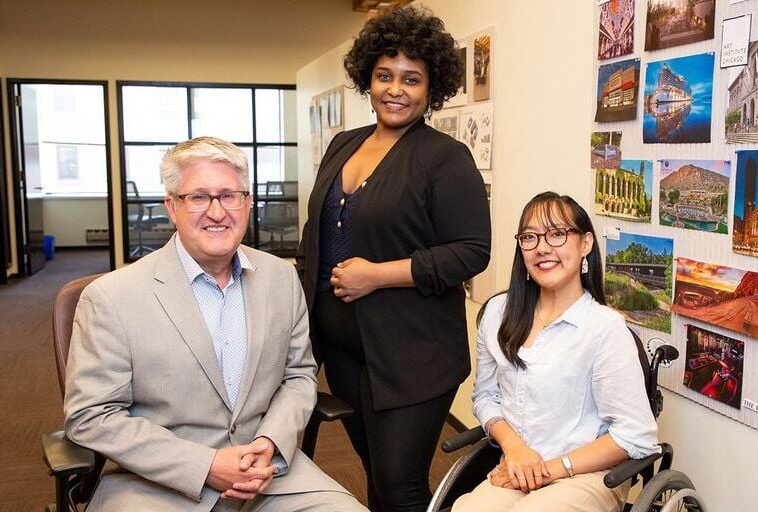
Now employed as an architect and accessibility specialist with LCM Architects, Wiesbrock is helping shape a more inclusive built world. She’s one of the firm’s 40-plus employees who consults with clients on accessibility codes for such elements as doorways, parking, restrooms and environmental controls to ensure architectural projects are accessible to people with disabilities.
“We do a lot of plan reviews — hotels, commercial spaces, restaurants, etc.,” Wiesbrock explains. “Once their floor plans and all their drawings are set, they’ll send them to us and then we’ll go through strictly on accessibility.”
She and others in Chicago are showing how to go beyond the minimum standards set by the Americans with Disabilities Act, or ADA, which became law 35 years ago this month.
Accessibility and inclusive design cater to a diverse population to which anyone can belong: those with a disability. Over 1 billion people, or 15% of the global population, live with some form of significant disability, according to the World Health Organization. The disabled population is the world’s largest minority group, says Bridget Hayman, director of communications for the disability advocacy group Access Living.
More than 520,000 Chicago residents, or about 10.1% of the area population, report having a disability, based on data from the Mayor’s Office of People with disabilities, or MOPD.
Read the full article on Crains: Chicago is rethinking what accessibility really means