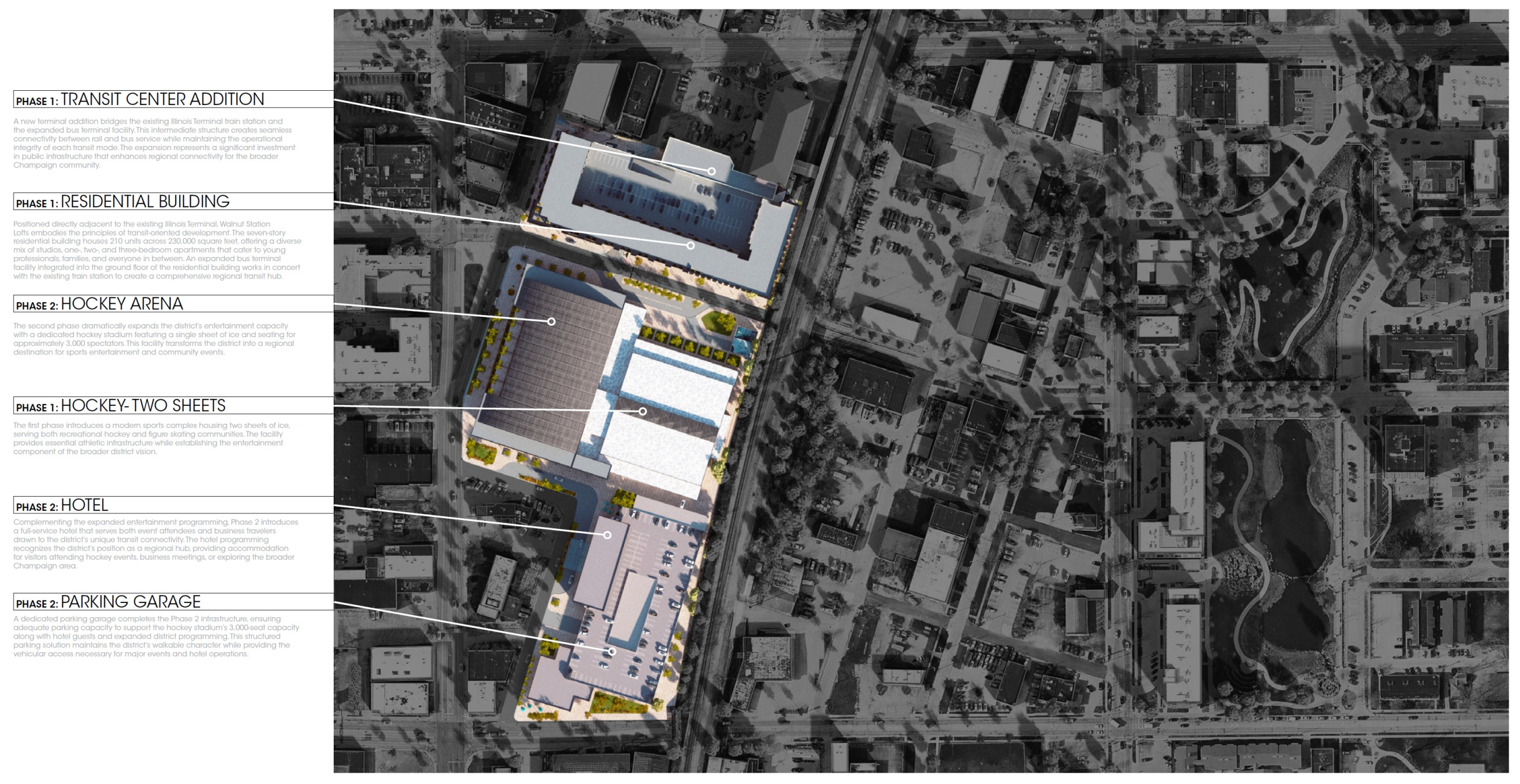
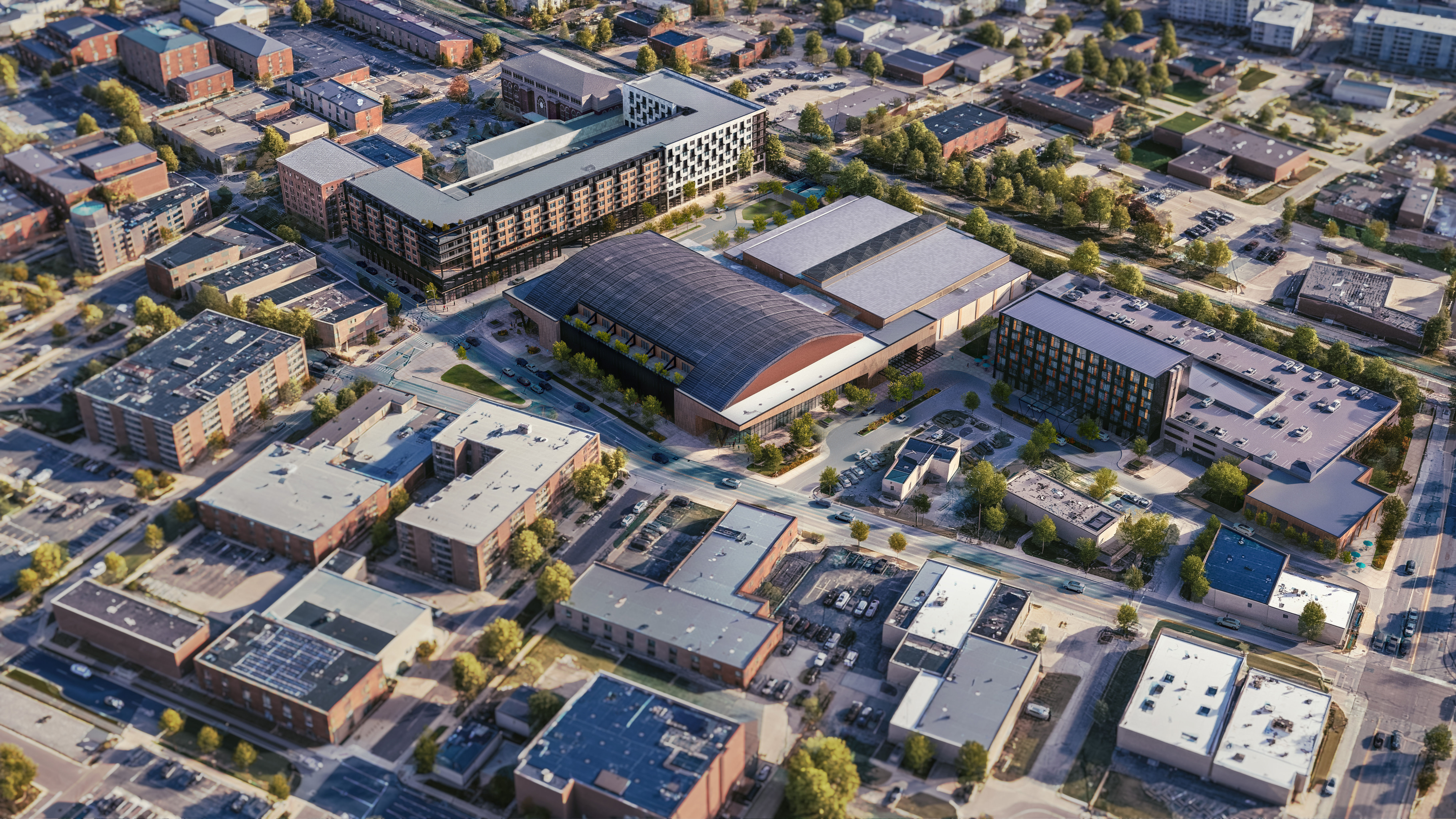
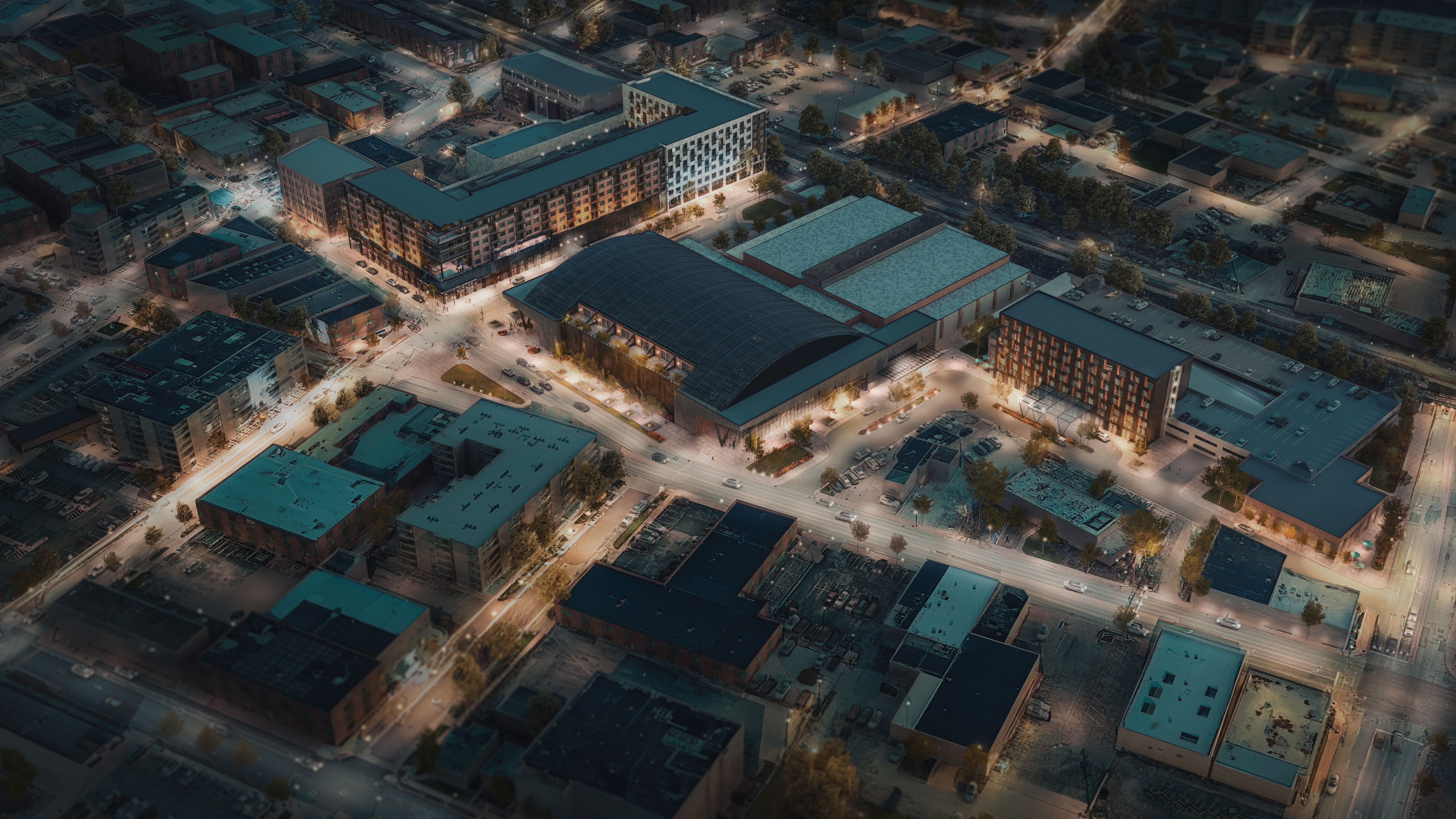
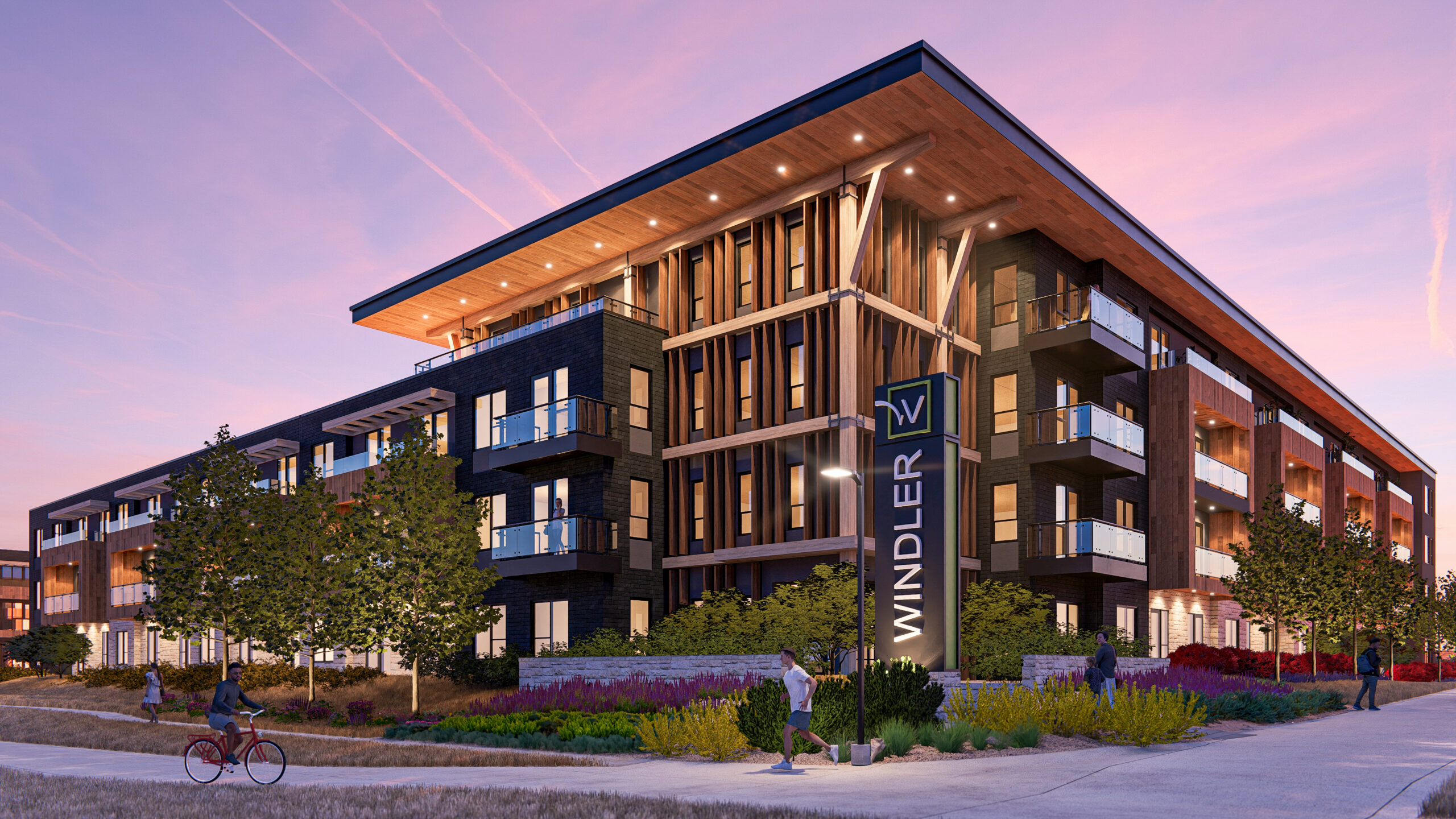
Station District represents a transformative mixed-use development that redefines urban living in the heart of Champaign, Illinois.
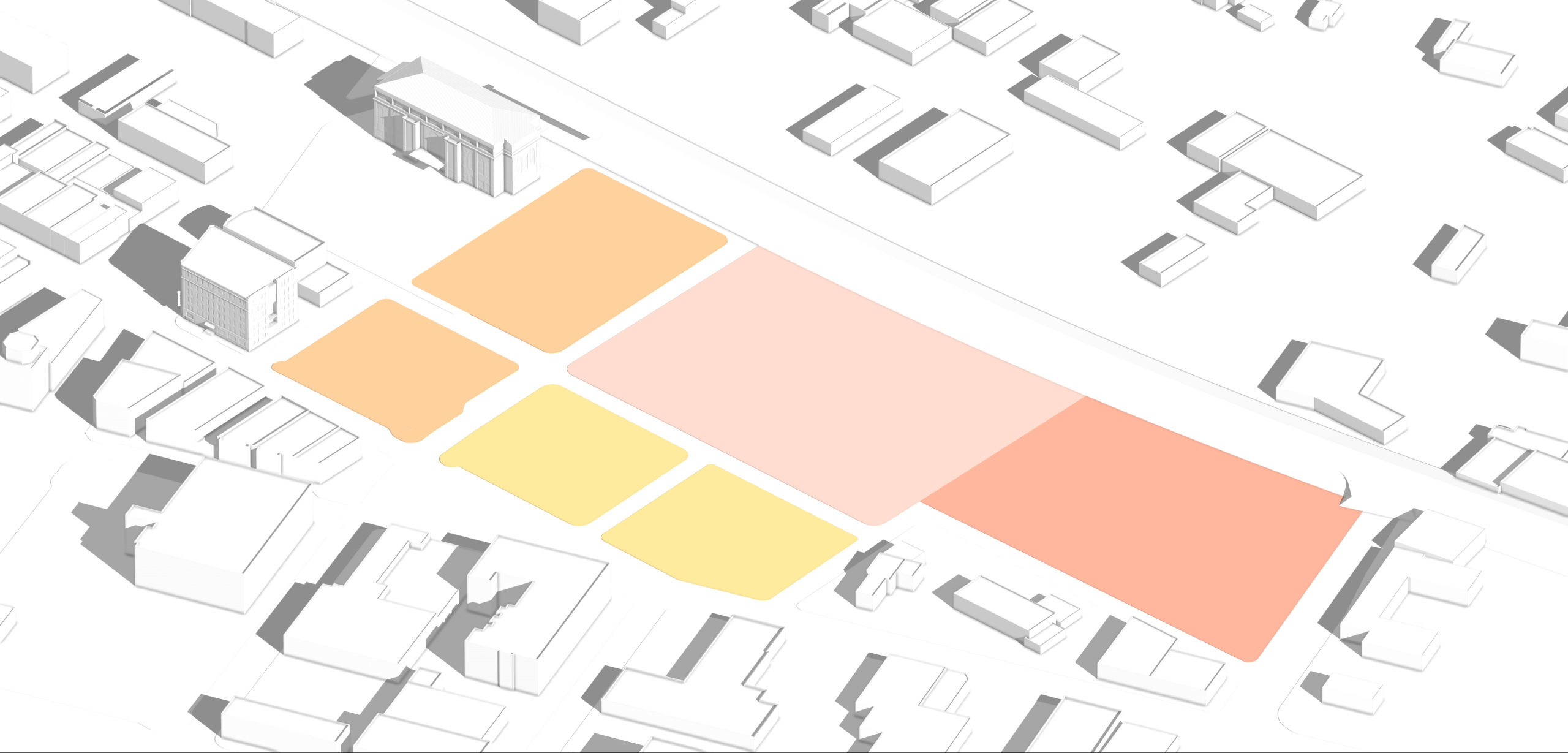
PARCELS
The terminal addition is designed to complement both the historic Illinois Terminal character and the contemporary residential building, creating a cohesive transit campus. The design ensures smooth passenger flow between train and bus services while integrating with the residential lobby and retail programming above.
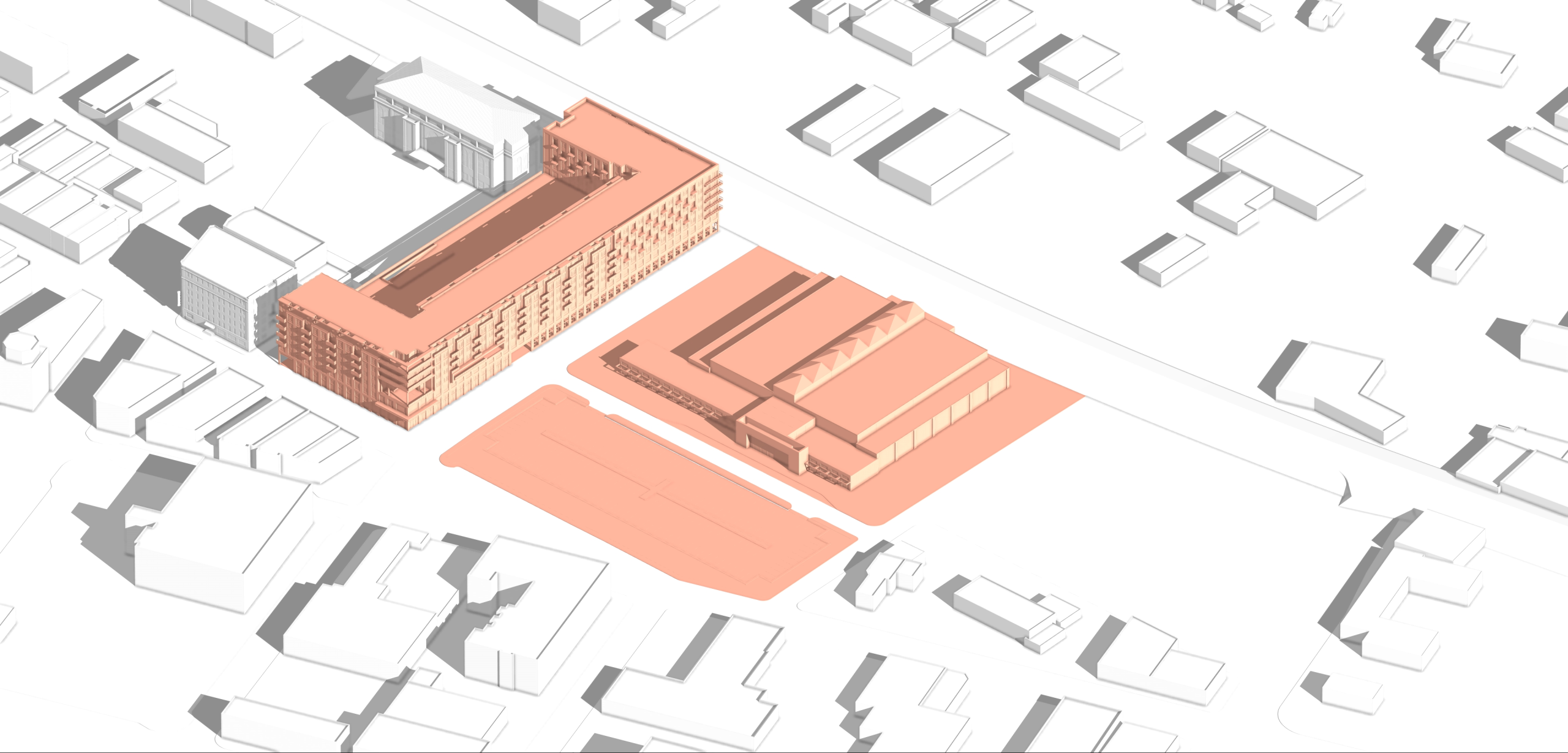
PHASE 1
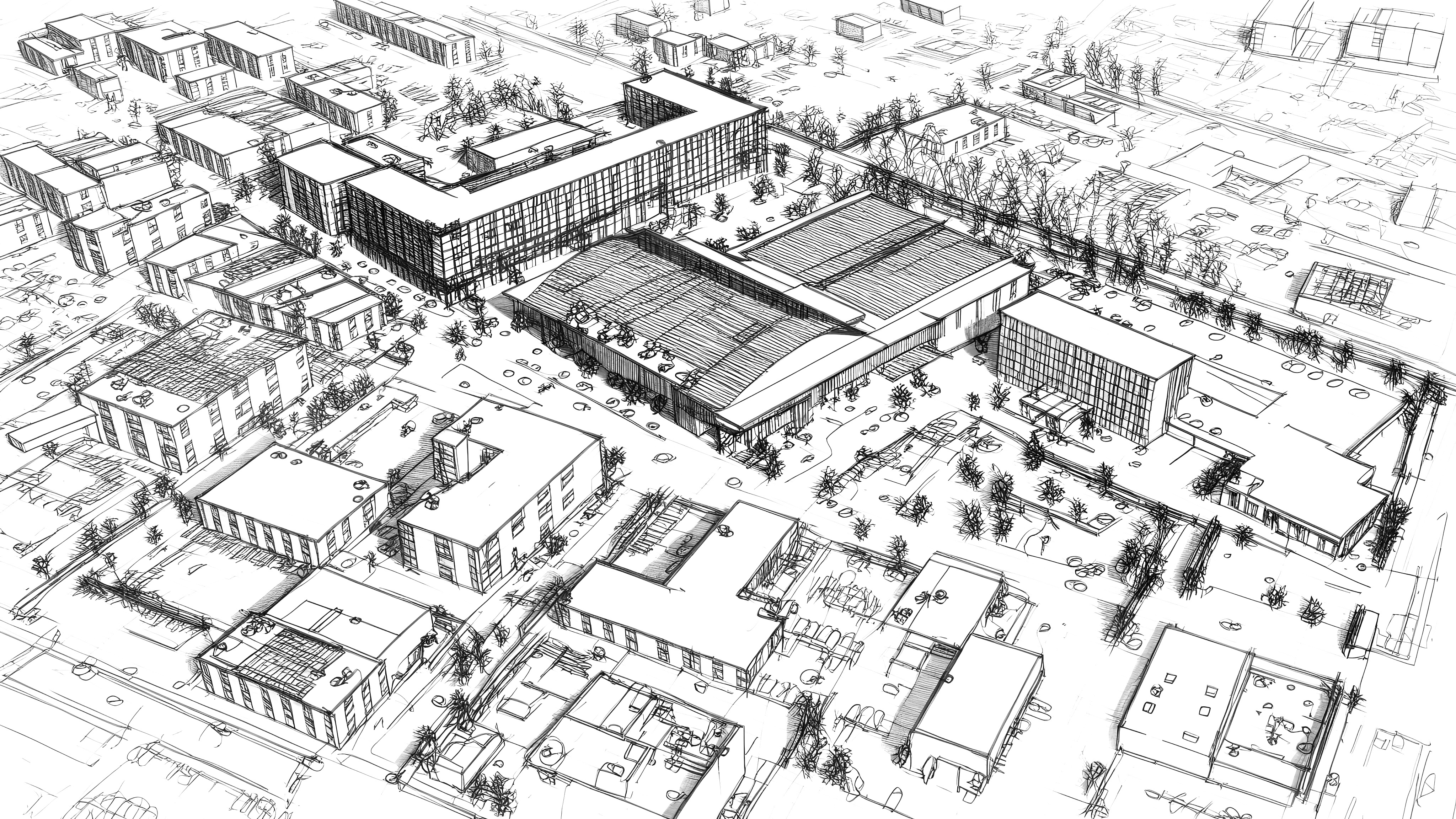
The Phase 1 hockey complex employs a more restrained architectural approach, designed with future expansion in mind. Recognizing that portions of the building will eventually be incorporated into or obscured by the Phase 2 hockey stadium, the initial facility focuses on functional efficiency rather than monumental expression. The prefunction areas are strategically designed to accommodate future conversion to double-loaded circulation, allowing seamless integration when the expanded hockey stadium is constructed.
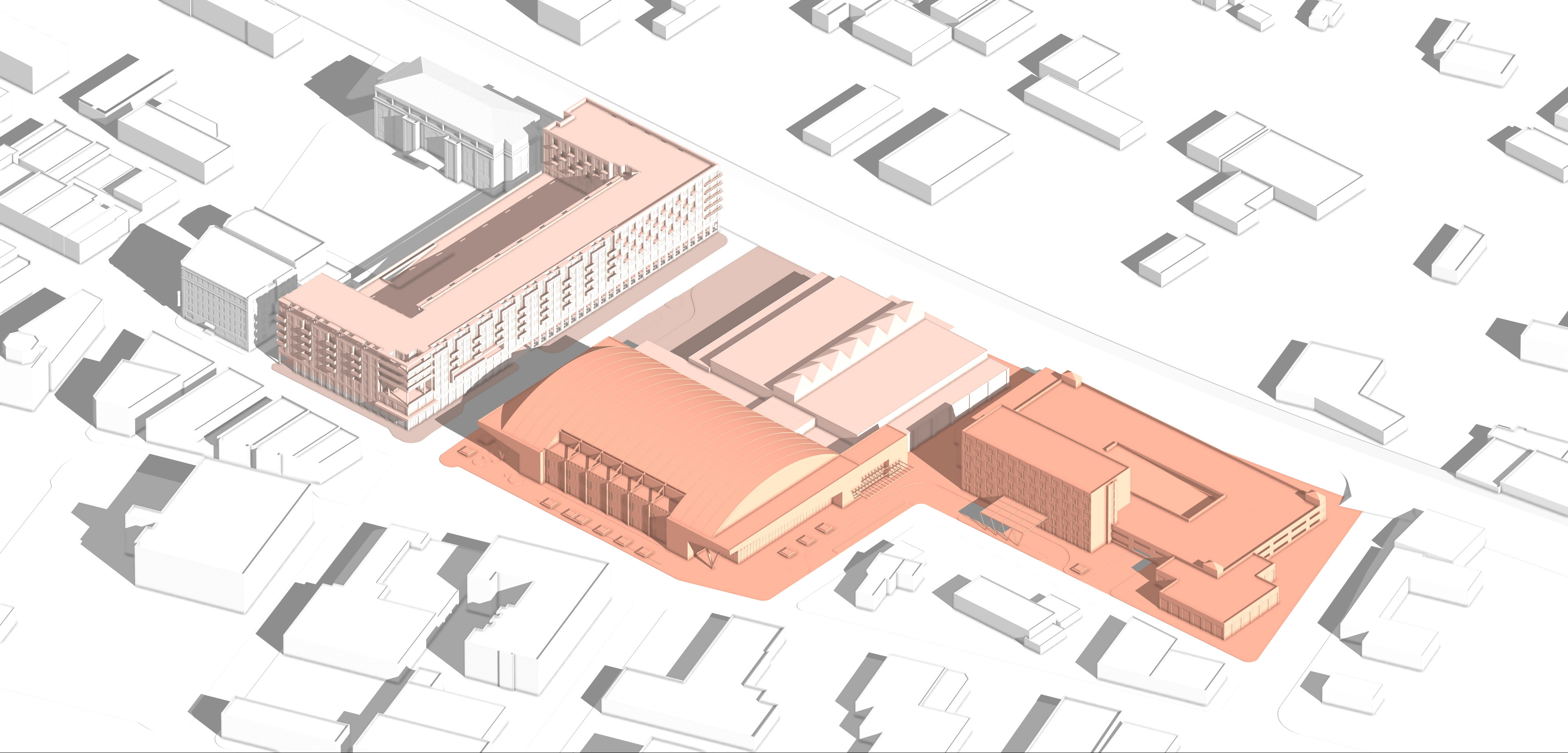
PHASE 2
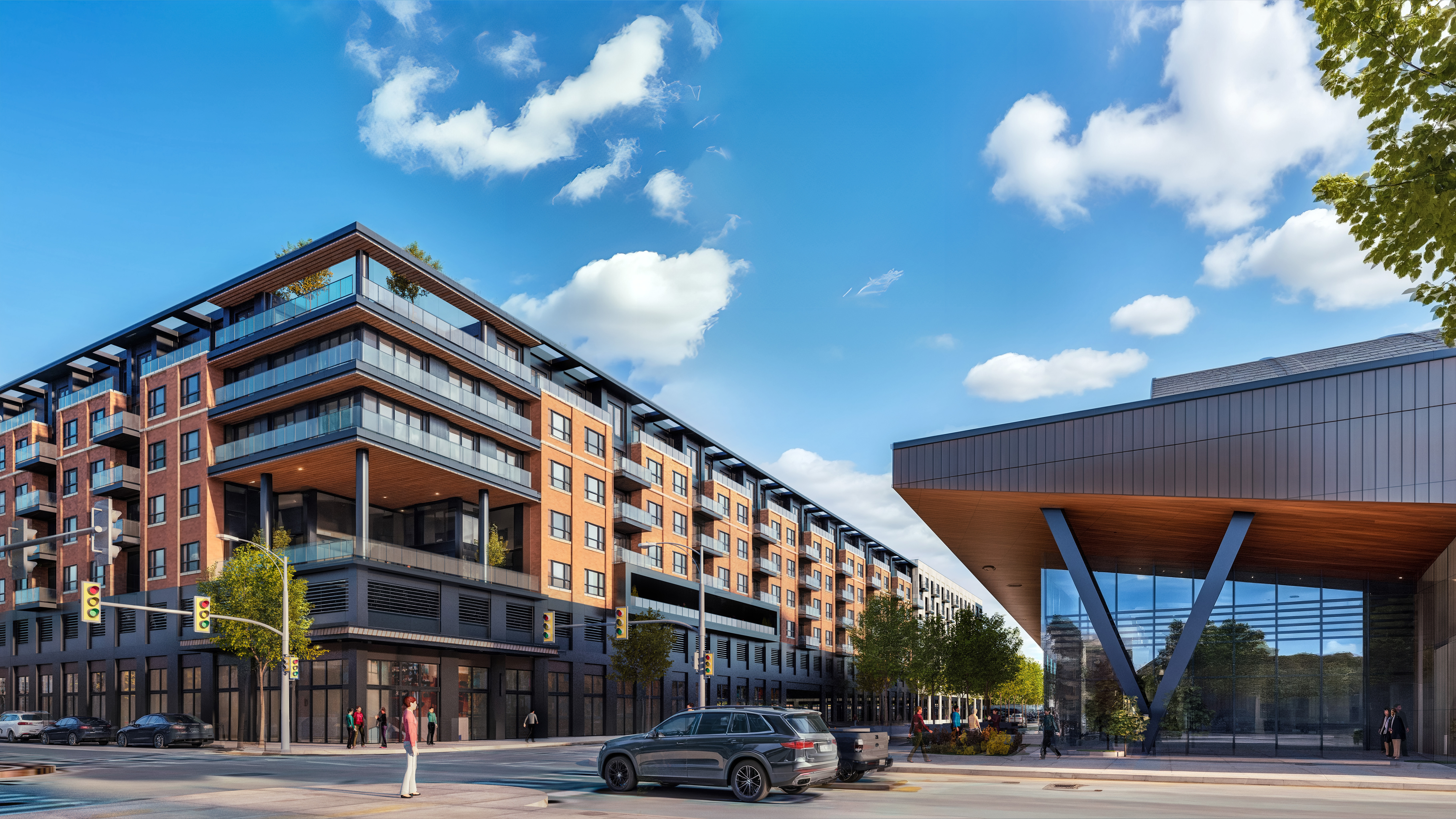
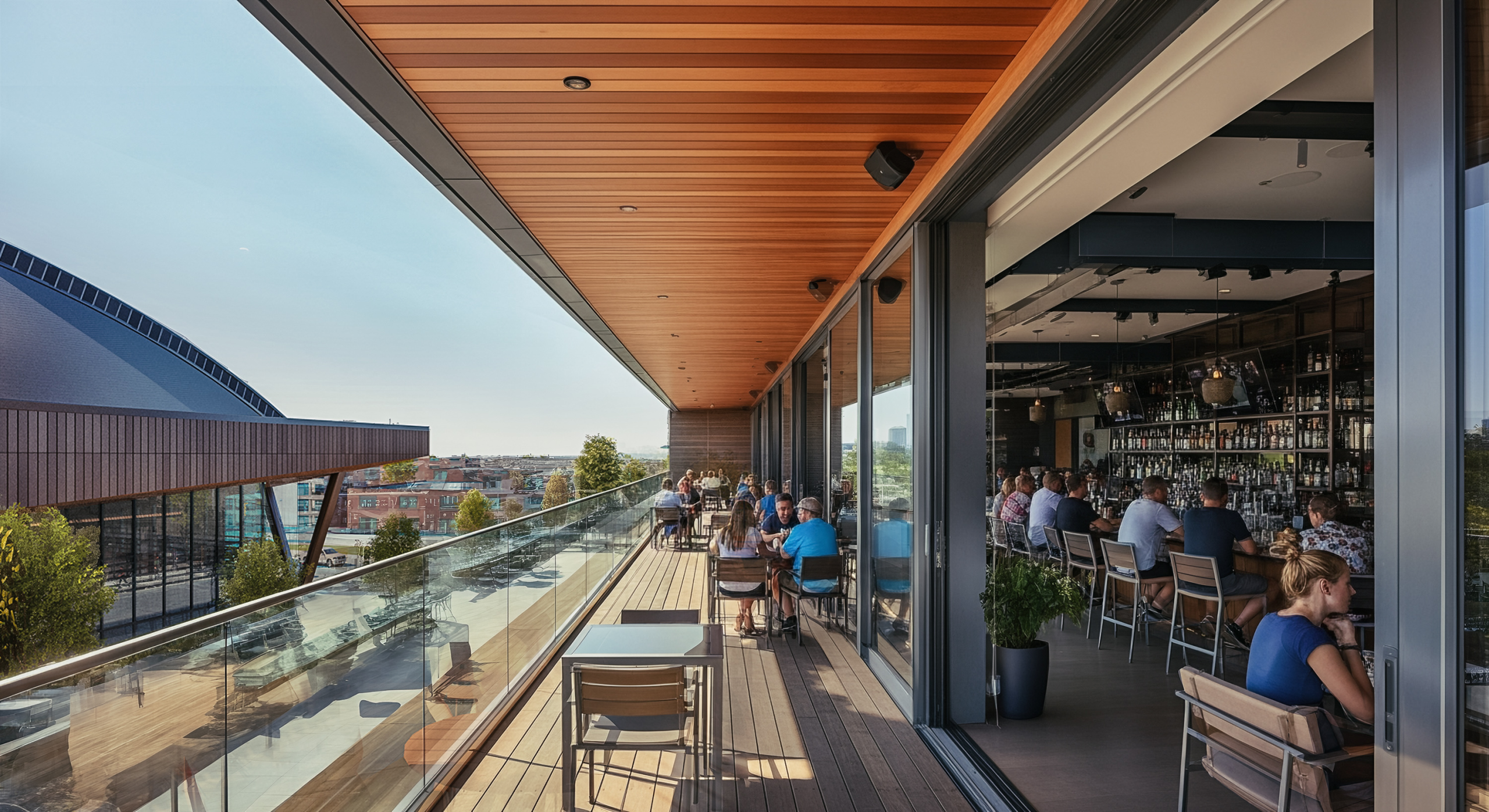
The Phase 2 hockey stadium embraces a contemporary aesthetic with flying soffits that extend toward the sidewalk, creating grand entrances and strong street presence. Large expanses of glass open the facility to public view, promoting transparency and community engagement while showcasing the activity within. This architectural boldness reflects the stadium’s role as the district’s primary entertainment destination and community gathering space.
Station District represents a transformative mixed-use development that redefines urban living in the heart of Champaign, Illinois.
Architectural Response
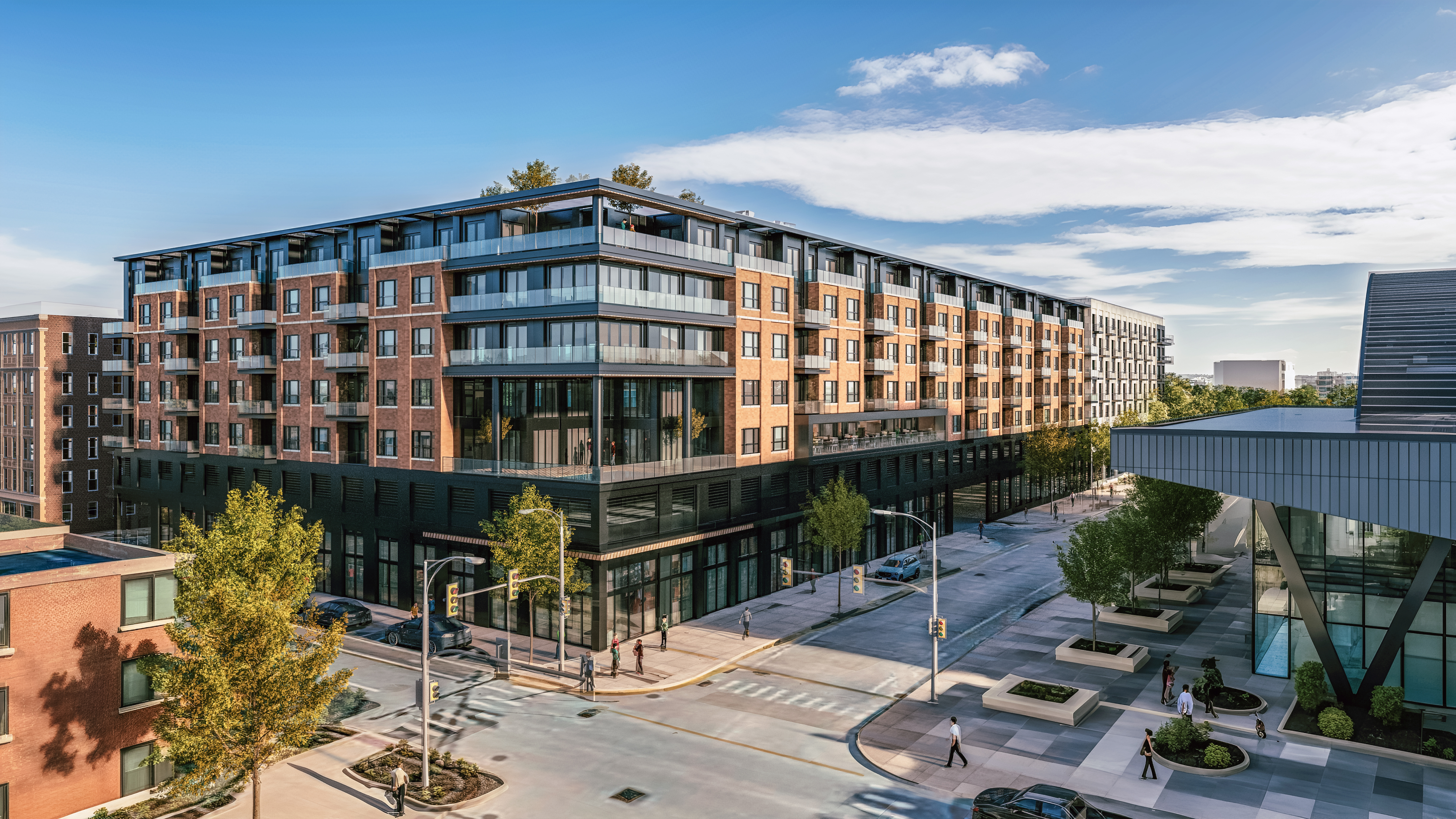
The residential building responds thoughtfully to its urban context through a carefully composed facade that balances bold statement-making with neighborhood sensitivity. The southwest corner features a striking black metal composition that announces the building’s presence at the primary intersection, while housing the luxurious residential lobby and retail spaces below. This dark metal corner element extends upward to frame a seventh-floor rooftop deck, creating a strong vertical accent that defines the building’s identity
The primary south-facing facade employs a warm brick palette that reinforces the building’s vertical nature while maintaining dialogue with Champaign’s existing urban fabric. A white accent band interrupts the western third of this facade, breaking down the building’s scale and adding visual interest along the lengthy street frontage. The upper floors step back slightly from the street, creating generous terraces for residents while reducing the building’s apparent mass from the pedestrian perspective. Balconies punctuate the facade throughout, providing private outdoor space and visual depth.
The primary south-facing facade employs a warm brick palette that reinforces the building’s vertical nature while maintaining dialogue with Champaign’s existing urban fabric.
The primary south-facing facade employs a warm brick palette that reinforces the building’s vertical nature while maintaining dialogue with Champaign’s existing urban fabric. A white accent band interrupts the western third of this facade, breaking down the building’s scale and adding visual interest along the lengthy street frontage. The upper floors step back slightly from the street, creating generous terraces for residents while reducing the building’s apparent mass from the pedestrian perspective. Balconies punctuate the facade throughout, providing private outdoor space and visual depth.